Running a successful healthcare practice involves more than providing excellent medical care. Clinics must also ensure patients remember their appointments, communicate effectively, and keep schedules running smoothly.
One of the most effective ways to achieve this is by using patient reminder software. Instead of relying on manual phone calls or handwritten schedules, healthcare providers can automate reminders and improve patient attendance while reducing administrative work.
Whether you operate a family clinic, dental practice, physiotherapy center, or specialty healthcare facility, patient reminder software can help create a more organized and efficient appointment process.
What Is Patient Reminder Software?
Patient reminder software is designed to automatically notify patients about upcoming appointments.
Reminders are commonly sent through:
Patients receive timely notifications containing appointment details, allowing them to confirm, reschedule, or cancel appointments before the scheduled visit.
Why Clinics Need Patient Reminder Software
Missed appointments affect every healthcare organization.
Common challenges include:
- Empty appointment slots
- Lost revenue
- Longer waiting lists
- Increased workload for reception staff
- Poor patient communication
- Reduced clinic efficiency
Patient reminder software addresses these issues by automating communication and helping patients stay informed.
If your clinic is struggling with missed appointments, read our guide:
Benefits of Patient Reminder Software
Reduce Patient No-Shows
Automated reminders significantly reduce forgotten appointments by notifying patients before their visit.
Related reading:
How to Prevent No-Show Appointments
Improve Patient Communication
Patients appreciate clear and timely communication.
Reminder software keeps patients informed about appointment dates, times, and any preparation instructions.
Save Administrative Time
Reception teams spend less time making reminder calls and more time assisting patients.
Automation improves overall clinic productivity.
Support Easy Rescheduling
When patients cannot attend, they can reschedule instead of becoming a no-show.
This helps clinics keep appointment schedules full and organized.
Increase Patient Satisfaction
Convenient reminders create a better patient experience and strengthen trust in your healthcare services.
Essential Features to Look For
The best patient reminder software should include:
- Automated reminders
- WhatsApp notifications
- Email reminders
- Appointment confirmations
- Online appointment booking
- Easy rescheduling
- Reporting dashboard
- Secure patient records
Combining these features helps healthcare providers improve operational efficiency.
Best Practices for Patient Reminders
To maximize results:
- Send reminders 24 hours before appointments.
- Send a second reminder a few hours before the visit.
- Keep patient contact information updated.
- Allow patients to confirm appointments easily.
- Monitor no-show reports regularly.
- Review reminder performance each month.
How Patient Reminder Software Works with Online Booking
Patient reminder software delivers even better results when integrated with online appointment booking.
Patients can:
- Schedule appointments online
- Receive instant confirmation
- Get automated reminders
- Reschedule appointments when needed
Related article:
Why Every Modern Clinic Needs an Online Appointment Booking System
How Orvexify Helps Clinics
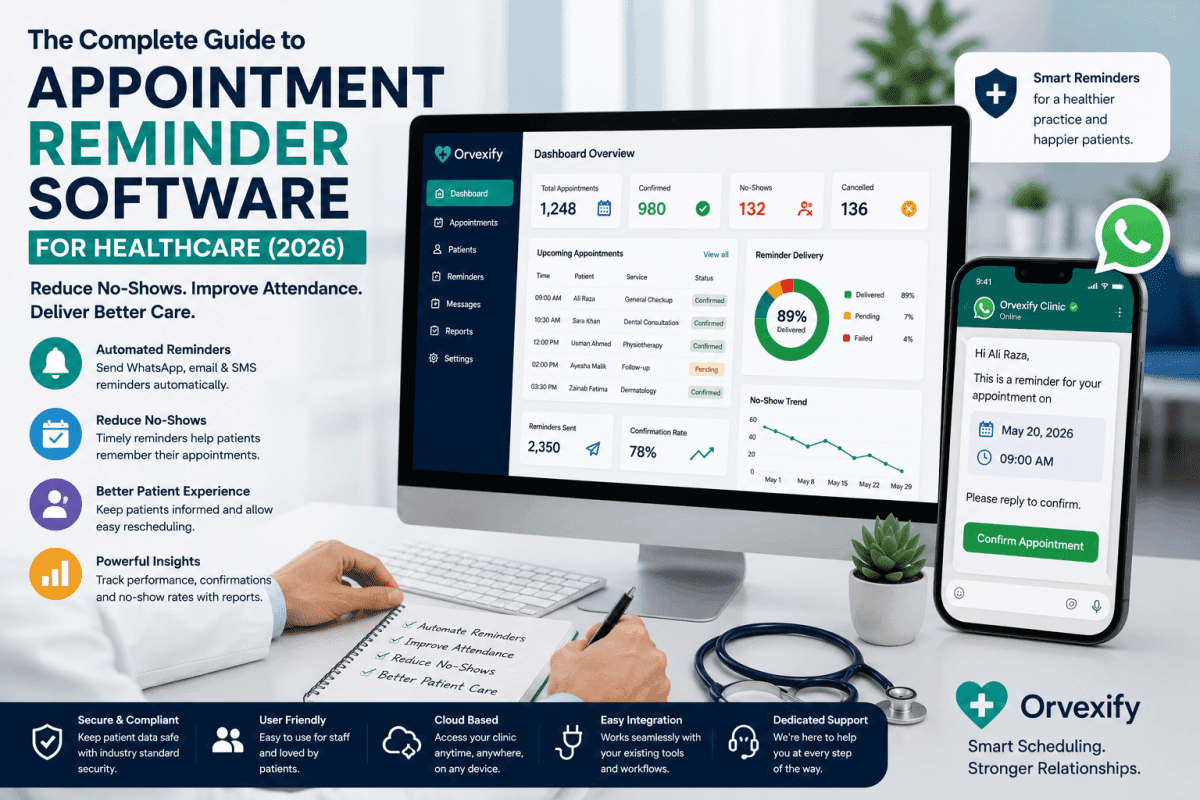
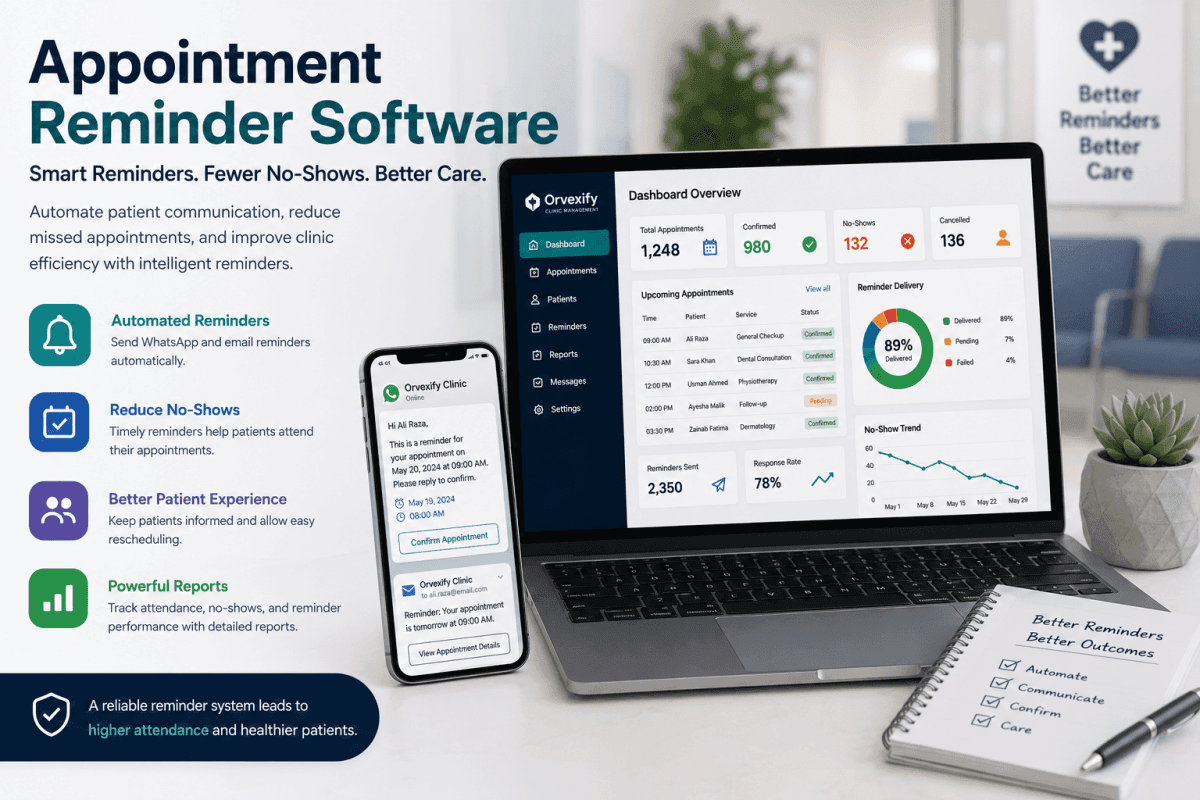
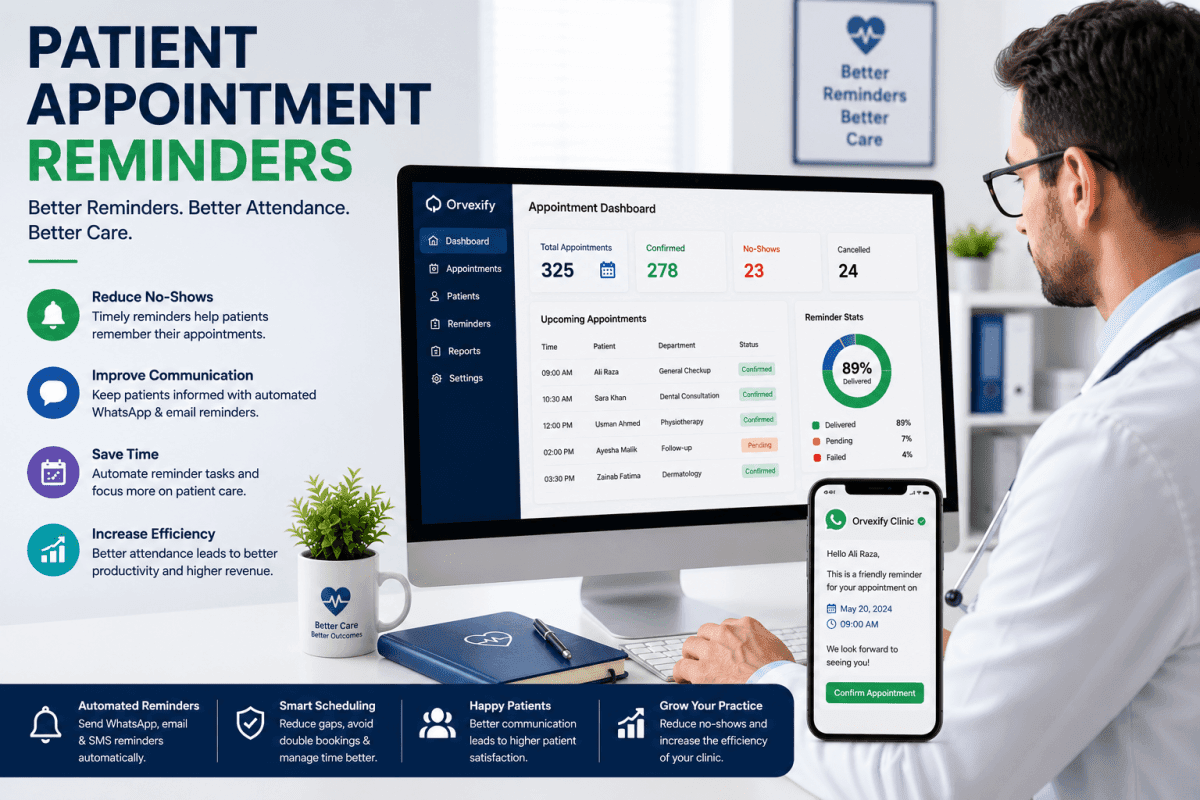
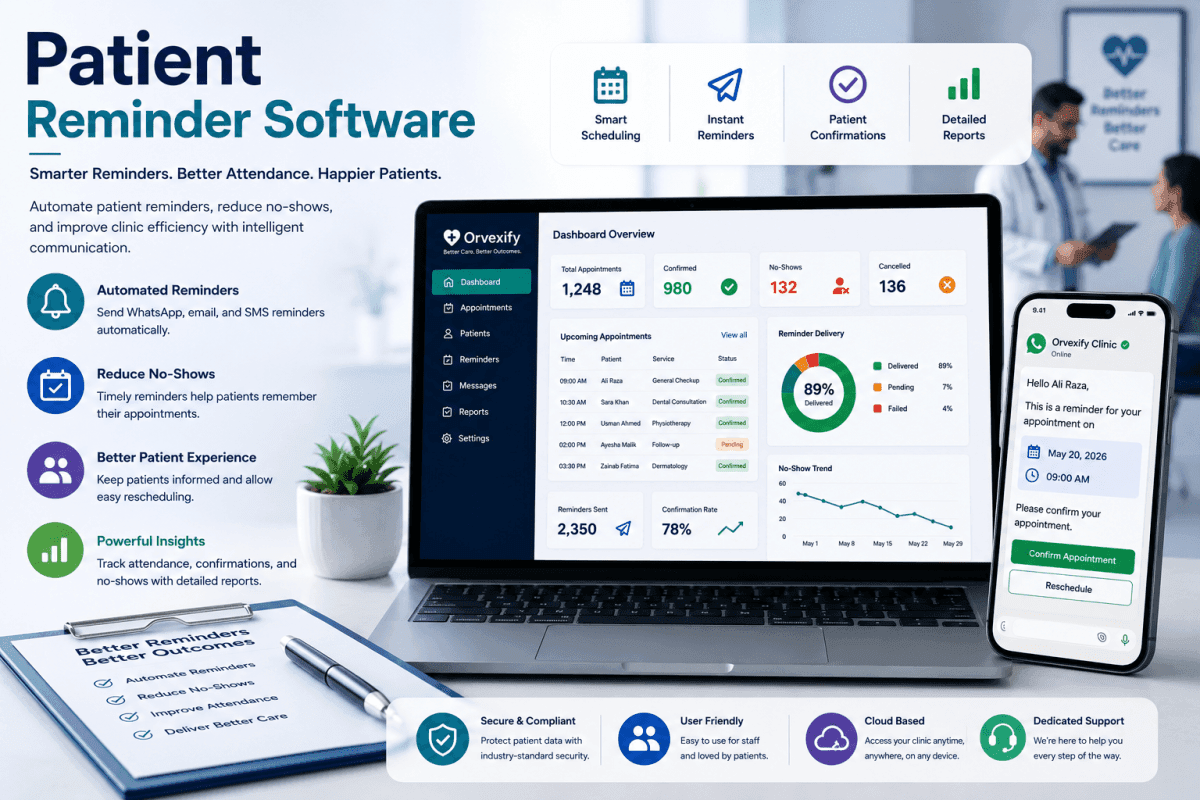
Orvexify provides healthcare providers with a modern appointment management platform that simplifies patient communication and scheduling.
With Orvexify, clinics can:
- Manage appointments from a centralized dashboard
- Send automated WhatsApp reminders
- Send automated email reminders
- Track confirmations
- Monitor attendance trends
- Generate performance reports
- Reduce patient no-shows
- Improve patient communication
By automating routine appointment management tasks, clinics can focus more on delivering quality patient care.
Final Thoughts
Patient reminder software has become an essential solution for healthcare providers looking to reduce missed appointments and improve operational efficiency.
By automating patient communication, simplifying scheduling, and reducing administrative work, clinics can deliver a better experience for both staff and patients while improving attendance and productivity.