How Automated Appointment Reminders Increase Patient Attendance
Missed appointments are more than an inconvenience for healthcare providers.
Every appointment that a patient forgets can mean unused clinical time, lost revenue, additional administrative work, and another patient who could have used that appointment slot.
For healthcare administrators, improving patient attendance is therefore an important part of running an efficient practice.
One of the simplest ways to address the problem is through automated appointment reminders.
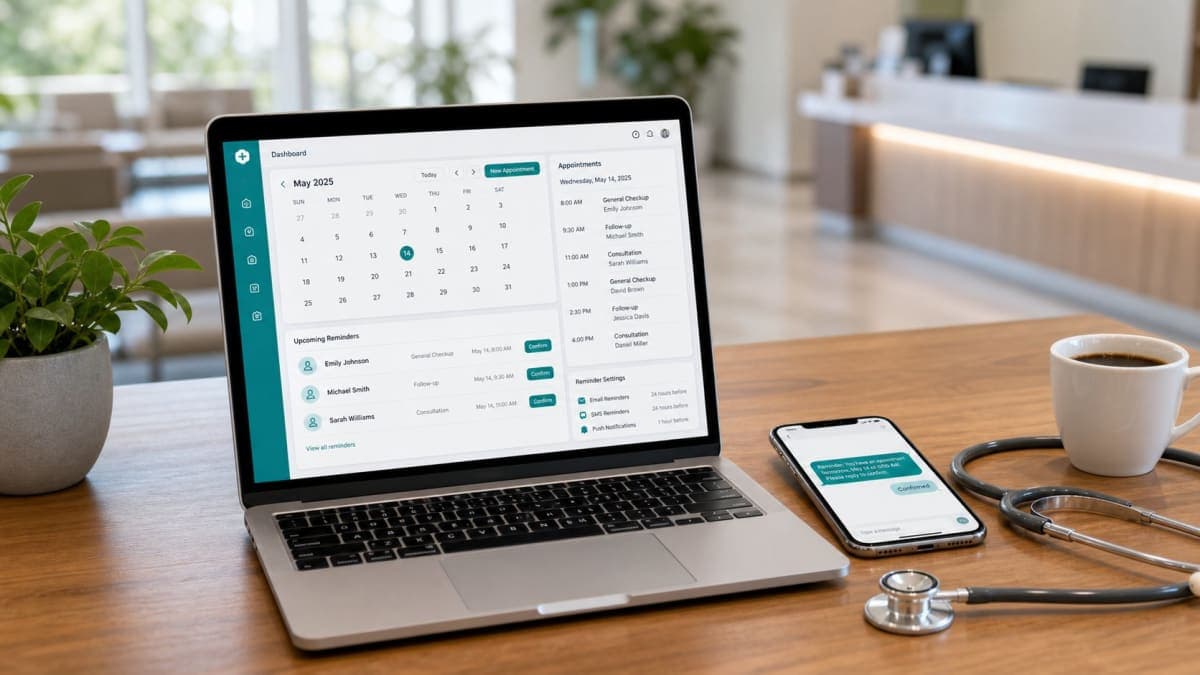
Instead of relying on receptionists to manually call or message every patient, automated reminder software can send timely notifications before an appointment. Patients receive the information they need, while administrative teams spend less time on repetitive communication.
This guide explains how automated reminders work, why they can improve patient attendance, what makes an effective reminder strategy, and what healthcare administrators should look for when choosing appointment reminder software.
What Are Automated Appointment Reminders?
Automated appointment reminders are scheduled notifications that are sent to patients before their appointments without requiring staff to manually contact each patient.
Depending on the software, reminders may be delivered through channels such as:
- Patient portals
- Other messaging channels
For example, a clinic might send one reminder 24 hours before an appointment and another reminder a few hours before the scheduled time.
The purpose is simple: keep the appointment visible to the patient and give them an opportunity to confirm, reschedule, or cancel when necessary.
For a broader overview of the subject, see Patient Appointment Reminders: The Complete Guide for Modern Healthcare Clinics (2026).
Why Patients Miss Healthcare Appointments
Before looking at how reminders improve attendance, it is important to understand why appointments are missed in the first place.
Patients may fail to attend because:
They simply forget
People have busy schedules. An appointment booked several days or weeks in advance can easily be forgotten.
Their schedules change
Work, family responsibilities, transportation problems, or other commitments can interfere with an appointment.
They do not remember the exact time
Even when patients remember that they have an appointment, they may forget the exact date or time.
They cannot attend anymore
Sometimes a patient knows they cannot make the appointment but does not notify the clinic.
There is no convenient way to confirm or reschedule
If changing an appointment requires a phone call during working hours, patients may simply miss it instead.
These problems show why communication is such an important part of no-show prevention.
Healthcare administrators looking for more strategies can also read Why Patients Miss Appointments and How Clinics Can Prevent It.
How Automated Reminders Improve Patient Attendance
Automated reminders work because they address several common reasons for missed appointments at the right time.
1. They Keep Appointments Fresh in the Patient's Mind
A patient may have booked an appointment two weeks ago.
At the time of booking, they were fully aware of it. But as the appointment gets closer, other responsibilities can take priority.
A reminder brings the appointment back to the patient's attention.
Instead of expecting patients to remember every appointment themselves, the clinic proactively communicates important details.
This simple process can help reduce forgotten appointments.
2. They Give Patients Time to Prepare
A useful reminder does more than say:
"Your appointment is tomorrow."
It can provide important information such as:
- Appointment date
- Appointment time
- Doctor's name
- Clinic information
- Confirmation instructions
- Rescheduling instructions
Giving patients this information in advance makes it easier for them to prepare for the visit.
For healthcare organizations looking to improve their overall scheduling workflow, Best Clinic Scheduling Software in 2026 provides additional guidance.
3. They Make Confirmation Easier
Patients are more likely to respond when the confirmation process is simple.
A modern appointment reminder system can allow patients to confirm their appointment without calling the clinic.
This reduces friction for both sides.
The patient does not have to spend time making a phone call, while the administrative team does not have to manually contact every patient.
4. They Help Patients Reschedule Instead of Simply Missing
Not every missed appointment is intentional.
Sometimes patients genuinely cannot attend.
The problem occurs when they do not inform the clinic.
Automated reminders can provide an opportunity for patients to recognize a scheduling conflict before the appointment.
If the system makes it easy to reschedule or contact the clinic, the appointment slot may be recovered instead of becoming a last-minute no-show.
For additional cancellation strategies, see How to Reduce Appointment Cancellations in Clinics.
Why Timing Matters
Sending a reminder at the wrong time can reduce its usefulness.
A reminder sent several weeks before an appointment may be forgotten again.
A reminder sent only a few minutes before an appointment may be too late to change the outcome.
For many clinics, a multi-step reminder strategy makes more sense.
For example:
24 hours before:
Remind the patient about the upcoming appointment.
A few hours before:
Send a final reminder with the appointment time and relevant details.
The exact timing should depend on the clinic's workflow, patient population, appointment type, and communication preferences.
The Administrative Benefits of Automated Reminders
Improving patient attendance is only one benefit.
Automated reminders can also improve the daily workflow of a healthcare organization.
Less repetitive work
Administrative staff do not have to manually send the same reminder messages throughout the day.
Fewer communication gaps
Every eligible appointment can follow the clinic's reminder workflow consistently.
Better appointment visibility
Patients receive important appointment information directly instead of relying entirely on memory.
More efficient staff utilization
Staff can spend more time handling complex scheduling requests, patient questions, and other important tasks.
Better operational insight
Some appointment reminder platforms provide analytics that help administrators understand attendance, cancellations, and reminder activity.
What Should Healthcare Administrators Look for in Reminder Software?
Not every appointment reminder platform is equally useful.
When evaluating software, healthcare administrators should consider several factors.
Multiple communication channels
Look for software that supports the channels your patients actually use.
For example, WhatsApp and email may be particularly useful depending on your patient population.
Flexible reminder schedules
The ability to create different reminder timings gives clinics more control over their communication strategy.
Easy appointment management
Reminders should work alongside the clinic's scheduling workflow instead of creating additional administrative work.
Patient-friendly communication
Messages should be clear, concise, and easy to understand.
Reporting and analytics
Administrators should be able to understand how the reminder system is performing.
Simple setup
Software that takes excessive technical knowledge or complicated configuration can create unnecessary barriers for smaller healthcare organizations.
Scalability
The system should continue working efficiently as the number of appointments, providers, and locations increases.
For a detailed comparison of what clinics should consider before purchasing software, see Best Appointment Reminder Software for Clinics.
How Orvexify Helps Clinics Automate Patient Reminders
Orvexify is designed to help healthcare providers simplify appointment management and patient communication.
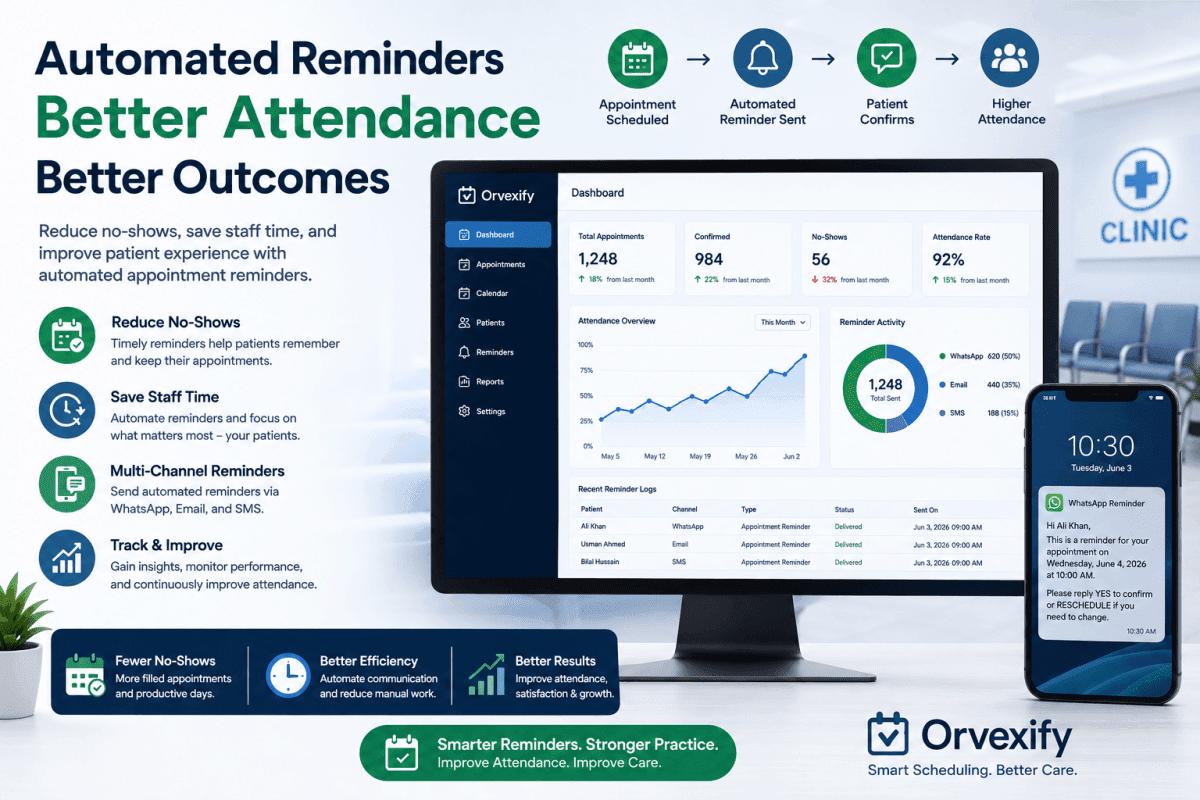
With Orvexify, clinics can manage appointments and automate reminders from one platform.
Key capabilities include:
- Online appointment booking
- Automated appointment reminders
- WhatsApp reminders
- Email reminders
- Appointment management
- Clinic analytics
- Patient communication
- No-show reduction workflows
Instead of depending on staff to remember when every patient needs to be contacted, the reminder process can be handled automatically.
This gives healthcare administrators more control over their scheduling workflow while reducing repetitive administrative tasks.
You can learn more about the platform on the Orvexify Features page or explore available plans through the Orvexify Pricing page.
A Practical Reminder Strategy for Clinics
Healthcare administrators can start with a simple workflow.
Step 1: Confirm the appointment
Send an immediate confirmation after the patient books.
Step 2: Send an advance reminder
Send a reminder around 24 hours before the appointment.
Step 3: Send a short final reminder
Send another reminder a few hours before the appointment when appropriate.
Step 4: Make rescheduling easy
Give patients a clear way to contact the clinic or change their appointment.
Step 5: Monitor attendance
Track no-shows, cancellations, confirmations, and appointment trends.
Step 6: Improve the workflow
Use the collected data to determine which reminder timing and communication channels work best for your patients.
This creates a repeatable process instead of relying on individual staff members to remember every task.
Final Thoughts
Patient attendance is closely connected to communication.
A patient cannot attend an appointment they forgot about, and a clinic cannot recover an appointment slot if it does not know that the patient is unable to attend.
Automated appointment reminders create a simple communication layer between the clinic and the patient.
They help keep appointments visible, give patients time to prepare, make confirmation easier, and provide an opportunity to reschedule when plans change.
For healthcare administrators, the biggest advantage is that this communication can happen automatically without adding the same amount of work to the administrative team.
If your clinic is still relying heavily on manual calls and messages, moving to automated appointment reminders can be a practical step toward a more efficient scheduling workflow.
For more strategies, read The Complete Guide to Improving Patient Attendance and Clinic Efficiency and Healthcare Appointment Reminders: The Complete Guide to Reducing No-Shows in Modern Clinics.