A clinic that sends one reminder the night before has not built a reminder system. It has sent a ping.
Patients forget in more than one way. Some never put the visit on a calendar. Some meant to come and then a child got sick at lunch. Some confirmed yesterday and still need the address in front of them while they look for parking. Those are not the same problem. One email cannot do all three jobs.
This page is about when the message goes out, and what that moment is for. It is not another list of reasons people miss appointments. It is not a channel war. It is the clock.
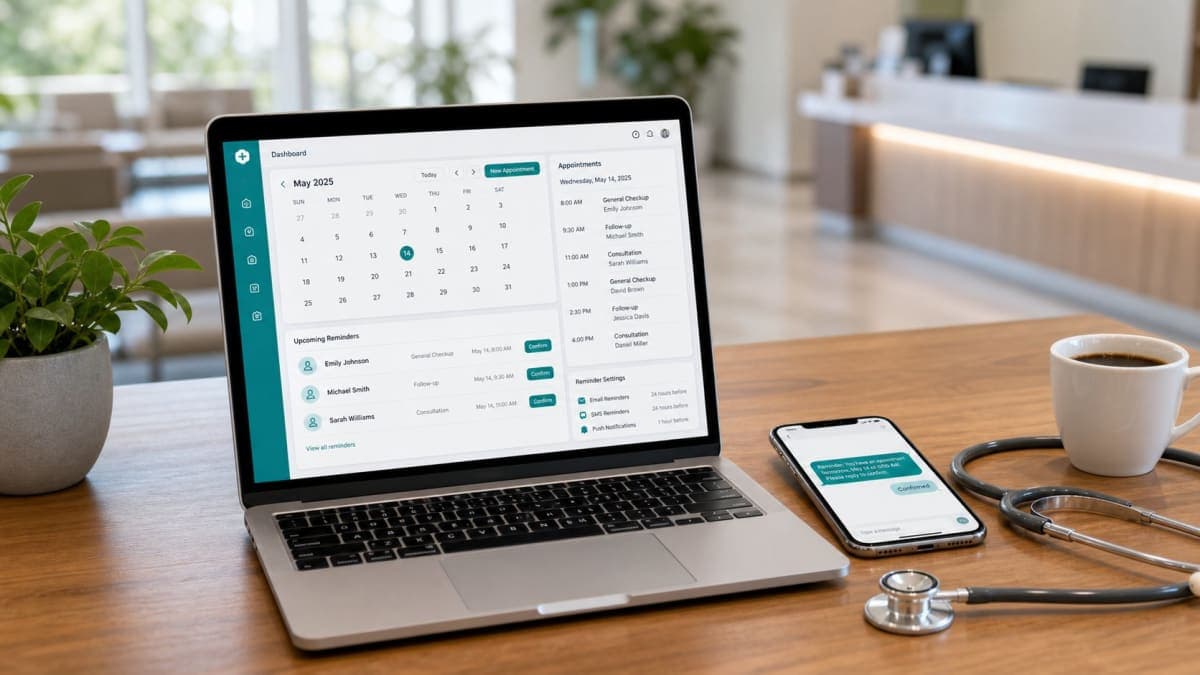
Orvexify runs three emails on that clock: 24 hours before, 2 hours before, and a 30-minute note. Confirm and Cancel sit in the first two. The last one is short. Patients do not install an app. Staff see who answered.
We do not publish a 70% no-show figure. Your diary is the only score that matters.
Forgetting has a clock
Most empty chairs are not a protest. They are a collision between a date set last week and a life that moved.
Three windows show up again and again in small practices:
Yesterday’s self versus today’s diary.
The patient booked on Tuesday for Thursday. Thursday morning they are already in traffic for something else. A message the day before is the one that still leaves time to give the slot back.
The same-day break.
School called. A meeting overran. The car would not start. A message two hours out is the one that still might free the room before the clinician is standing in it.
The last hundred metres.
They said they were coming. They are on the road, or they think they are. A short note half an hour out is not a debate. It is the time, again, while they can still use it.
If you only send the first, you never hear about the school run. If you only send the last, you hear too late to refill anything. The three times are a sequence, not a volume knob.
What “24 hours before” is for
The 24-hour email is the planning message.
Its job is not to scare anyone. Its job is to put the visit back on a screen while there is still a working day around it. A parent can still swap a pickup. A patient can still say they cannot come. The front desk can still offer the hour to a waiting list — if you actually look at cancellations.
That is why Confirm and Cancel belong here.
- Confirm means they have seen the time and they intend to use it. Tomorrow morning you plan the room on that, not on hope.
- Cancel means the hour is back. It is only useful if someone sees it the same afternoon.
- Silence is not a confirm. The visit stays in the diary as pending. You still have a time. You do not have a commitment.
Keep the 24-hour mail short:
- Clinic name they know
- Date and time in their timezone — the clinic’s timezone, written clearly
- Who they are seeing, if you have more than one clinician
- Confirm
- Cancel
- Nothing that looks like a newsletter, a review request, or a blog
If the 24-hour email has to scroll past three banners to find the time, you did not send a reminder. You sent a homepage.
A 24-hour notice also has a hard limit: it only exists if the visit is still more than 24 hours away when you book. If someone books this afternoon for tomorrow morning, that first mail never had a window. That is not a bug. Do not promise “you will always get a reminder 24 hours before” on the booking receipt if the gap was 10 hours. The 2-hour mail can still run. Be honest on the booking email.
What “2 hours before” is for
The 2-hour email is the same-day message.
By then the planning window is over. The question is no longer “does Thursday still work.” The question is “are you actually coming in two hours.”
This is the mail that catches:
- A meeting that ate the morning
- A child sent home
- A patient who confirmed yesterday and then forgot which site
- A patient who never opened the 24-hour mail at all
Confirm and Cancel still belong here for people who have not answered yet. If they already cancelled, you should not be sending this. If they already confirmed, some clinics still want a poke; the honest product choice on Orvexify is: pending visits still get Confirm / Cancel at 2 hours. Confirmed visits skip this ping and wait for the 30-minute note. Do not advertise a 2-hour “are you sure?” to someone who already tapped Confirm unless you actually send it.
Same rules as 24 hours: clinic name, time, clinician, two taps, no essay.
Staff-side, this is the mail that makes the difference between “we found out at 10:02 that 10:00 was empty” and “we knew at 8:05.” You will not refill every cancelled 2-hour slot. You will refill some. That is the whole economic argument. It does not need a fake percentage.
One operational warning: if your cancellation policy says “no cancel inside two hours,” do not put a Cancel button on a 2-hour reminder and then punish the patient for using it. Either the button is real, or you take it off. Orvexify’s Cancel from the reminder is meant to be real. If the clinic wants a stricter cutoff, that is a clinic rule — say it in the 24-hour mail, not after they tap.
What “30 minutes before” is for
The 30-minute note is not a third copy of Confirm / Cancel.
By 30 minutes, a Cancel rarely helps the diary. The clinician is already blocked. The next patient is not standing in the car park waiting to jump in. A long email with two big buttons at that point is noise, and it invites a cancel you cannot use.
The 30-minute mail’s job is narrower:
- They already said they are coming, or they are close enough that a short “see you soon” is the useful thing
- Put the time in front of them once more
- Do not ask them to install anything
- Do not start a new conversation
On Orvexify this note is for confirmed visits. It is once. It does not include Confirm / Cancel. Date and time. That is the product, not a marketing flourish.
If a clinic sends a 30-minute blast to everyone who never opened the first two mails, they are not “being thorough.” They are training patients to ignore the earlier messages. The last ping only works if the earlier ones did the sorting.
Why not seven days. Why not one email.
Seven days before is a nice idea for surgeries that need fasting, forms, or a driver. It is a prep message, not an attendance message. Most two-doctor clinics do not need it as a default. If you need prep, send it at booking, or as a separate note with the actual instructions. Do not mix prep with Confirm / Cancel or you will bury the taps.
One email “the day before” is what every receptionist already tries to do by phone. It fails for the same reason the phone list fails: it is a single roll of the dice, and the same-day break never gets a second chance.
Three times is not “more nagging” if each mail has a different job. Nagging is the same sentence, three times. A system is three sentences that do three things.
Same-day booking, late booking, no magic
Reminders are scheduled from now until the visit, not from a slogan.
- Booked 48 hours out: 24-hour, 2-hour, and — if they confirm — 30-minute can all exist.
- Booked 10 hours out: there is no 24-hour mail. The 2-hour can still exist.
- Booked 40 minutes out: you are not running a reminder programme. You are taking a walk-in with a receipt.
Say this out loud to staff so they do not tell patients “you will get three emails” for a same-day slot. The clock is the product.
Timezone is part of the clock. A clinic in one city with a patient who travels is still one clinic timezone on the mail. Write the zone. Do not assume the phone’s local clock matches the room.
Calling the list versus this cadence
Manual calls fail in a specific, boring way.
Monday is quiet, so someone calls Tuesday’s list. Tuesday is slammed, so Wednesday’s list never happens. There is no record of who was actually reached. The person who would have cancelled at 4pm never got a number to tap.
A 24-hour / 2-hour / 30-minute email cadence does the part humans are bad at: the same thing, at the same offset, with a log. It does not replace a human when a patient is confused, late, or angry. It stops the front desk from being a call centre for “just checking you remember.”
If your clinic still wants a phone call for first visits, or for anyone over a certain age, do that on top of the emails, not instead of them. The email is the record. The call is the exception.
Time math, without theatre: 40 appointments tomorrow, three minutes a call, everyone answers on the first try — that is already two hours before anyone did clinical work. They will not all answer on the first try.
How to write each mail so it gets a tap
Tone: the clinic, not a vendor. From-name should be the clinic name. If the inbox says a developer agency, people file it as spam and you deserve that.
Subject lines that work are dull:
- Thursday 10:30 at [Clinic] — please confirm
- Today 2:30pm — [Clinic]
- See you in 30 minutes — [Clinic]
Subject lines that fail are campaigns:
- Anything with a fake percent
- “URGENT!!!” on a 24-hour mail
- “Open this to claim”
Body: one screen on a phone. Time first. Buttons next. Parking and “bring your card” can live on the 24-hour mail in one extra line. They should not live on the 30-minute note.
Confirm and Cancel should look like Confirm and Cancel. Do not hide Cancel because you are afraid of it. A hidden cancel becomes a no-show. A visible cancel can still become a filled slot.
Do not ask for a reply-by-email. People will write novels. The tap is the product.
What this is not
- Not a guarantee that every cancelled slot fills.
- Not a full EMR, chart, or billing system.
- Not a patient app.
- Not a 70% badge.
- Not “three emails for every single booking no matter when they booked.”
It is a booking page (or a staff-entered visit) plus a clock plus two taps plus a dashboard.
How Orvexify actually runs the clock
Orvexify is that layer.
- 24 hours before — email, Confirm / Cancel, if the visit is still far enough away when the job is scheduled.
- 2 hours before — email, Confirm / Cancel, for visits that are still pending. Cancelled visits stop. Confirmed visits do not get another action mail here.
- 30 minutes before — email, confirmed visits only, once, no buttons, date and time.
Email is on every paid plan. Starter is $14.99/month, two doctors, 300 appointments. Growth and Pro are waitlist. WhatsApp is those plans, not Starter, not live checkout today. No card to create an account.
If you want the patient-side of the tap, we already wrote confirm or cancel from the email — no app. If you still take bookings only by phone, the booking page is the other half.
Empty hours still have a cost. Put your own fee and your own missed count into the no-show cost calculator. That number is yours. A timing slogan is not.
A week you can actually run
Do not rebuild the clinic this afternoon. Do this:
- Write the three subjects. Dull on purpose.
- Put clinic name, time, clinician, Confirm, Cancel on the first two mails. Nothing else required.
- Put only time and clinic on the 30-minute note.
- For seven days, do not call the full list. Only call people who are pending after the 2-hour mail, if you have spare hands.
- Each morning, look at last night’s Cancelled and see whether any slot was reusable. If never, your problem is not reminders — it is how late the cancel arrives, or that nobody is watching the dashboard.
- After seven days, count DNA versus late cancel. Change one thing: either the 24-hour copy, or who watches cancels at 4pm. Not both.
That is a system. Three identical “don’t forget” emails is not.
A morning clinic, without fake numbers
Take a two-doctor morning. Twenty slots. Not a hospital.
Yesterday the 24-hour mails went out. By close of play you had twelve Confirmed, two Cancelled, six Pending. The two cancelled hours were offered; one filled. That is already a different Tuesday than a Tuesday where both chairs went cold at 9:00.
At 7:00 the 2-hour mails go to whoever is still Pending. One person Cancels. You will not fill 9:00 at 7:05 unless you have a walk-in list you actually use. You still stop the clinician from waiting on a name that was never coming. The Confirmed list from yesterday does not get another “please confirm.” They get the 30-minute note while they are looking for a space to park.
If you had sent one mail at 8pm and nothing else, the same-day cancel never happens on the record. You find out when the room is empty. That is the cost of a single ping: not “fewer emails,” but later information.
None of this requires a 70% slide. It requires that someone glances at Cancelled after the 24-hour wave, and that Confirm is treated as a plan, not as a mood.
Booking confirmation is not a reminder
The mail that says “you are booked” is a receipt. It should exist. It is not the 24-hour reminder.
Mix them and two things go wrong. Patients file the receipt and think they have already been reminded. Or they get no receipt and they are not sure the booking happened, so they book twice.
Keep the jobs separate:
- At booking — you have a slot. Date, time, clinic, maybe what to bring. No need for Confirm yet; they just chose the time.
- 24 hours — are you still coming. Confirm / Cancel.
- 2 hours — same question, same day, only if they have not answered.
- 30 minutes — you already said yes. See you shortly.
If your booking mail currently promises “you will receive a reminder 24 hours before” , add the honest clause: if the visit is more than 24 hours away. Same-day bookings get the shorter clock. Patients notice when the promise was false. Inboxes remember.
Staff-entered visits from the dashboard should ride the same clock as the public booking page. A phone booking is still a visit. If reminders only run for the link, you have built a second, worse process for the people who still call.
Who watches the dashboard
Software does not offer a cancelled hour to the next patient. A person does.
The 24-hour Cancel is wasted if nobody looks until the next morning. Pick a time that already exists in the day — 4pm, after the last consult, before people leave — and look at Cancelled and Pending for tomorrow. That is a ten-minute habit. It is the difference between a reminder product and a reminder decoration.
Pending at 4pm is not an emergency. It is a list of people who have not tapped. You can leave them. You can call the ones who always forget. You cannot call all of them every day; that is the old system. Use the list to choose exceptions, not to recreate the phone tree.
If Cancelled at 4pm is always empty, either nobody can cancel (bad copy, broken button, app wall) or your patients truly never give the slot back. Fix the mail before you buy another channel.
FAQs
Why 24 hours, 2 hours, and 30 minutes — not 48 and 12?
24 hours is still a working day before the visit for most weekday clinics. 2 hours is still inside the same day, before the clinician is in the room. 30 minutes is travel-and-parking, not planning. Other offsets can work. These three match how small clinics actually fail: overnight forget, same-day break, last-minute drift.
Does every appointment get all three emails?
No. If they booked too close, the 24-hour mail never had a gap. If they cancelled, later mails stop. The 30-minute note is for confirmed visits, once, without buttons.
Should the 30-minute email include Cancel?
Usually no. You cannot use the slot. Asking at 30 minutes trains people to ignore the earlier Cancel, or to cancel when it only hurts you.
What if they confirm at 24 hours and then cannot come?
They should still be able to cancel from the 2-hour mail if you send actions to pending-only and they already confirmed — in that case they need another way: call the clinic, or a cancel link that still works from the original mail. Do not pretend the 30-minute note is a cancel tool.
Do patients need an app?
No. Email, then Confirm or Cancel. Details: no app to confirm.
Will this cut no-shows by a set percent?
We will not give you a 70% sticker. Count your own missed visits for a month, then run the clock, then count again.
Is this only for big groups?
No. Starter is two doctors and 300 appointments a month. The cadence is built for a front desk that should not also be a call centre.